
Rejecting the Myth: Why Asking “What Causes Autism?” Misses the Point
Rejecting Outdated Myths and Harmful Narratives About Neurodivergence
Recently, clickbait headlines made the rounds again, with non-scientists confidently declaring they’d found the “cause” of autism. As usual, (and rightly so) the scientific community responded with data, peer-reviewed research, and understandable frustration.
But something more fundamental was missing.
No one questioned the premise.
That is, why are we still treating autism as a problem that needs a cause, a cure, or prevention?
TL;DR
Autism isn’t a disease to solve or prevent. It’s a neurotype. Rising diagnosis rates reflect awareness, not an epidemic, and harmful narratives distract from what actually matters: access, inclusion, and support for neurodivergent people.
Autism Is Not a Problem to Be Solved
Framing autism as something with a “cause” quietly implies defect, error, or failure.
That framing is flawed.
Autism is not an illness.
It isn’t a virus, a tragedy, or the result of vaccines, paracetamol, or whatever the latest scapegoat they trot out is.
Autism is a neurotype – a natural variation in how brains process information, communicate, and experience the world. Pathologising it fuels stigma and diverts energy away from where it belongs: practical support, understanding, and accessibility.
Why the So-Called “Autism Epidemic” Isn’t Real
A common conspiracy claim is that autism is “increasing at alarming rates”.
Here’s the simpler explanation.
We’re better at recognising it.
Language has improved. Diagnostic criteria are broader and more accurate. Clinicians are more informed. Adults, women, and marginalised groups are finally being seen.
Think of the number of named stars in the sky - those stars were always there. We just built better telescopes.
Neurodivergent people have always existed. They’re not suddenly appearing. They’re being counted.

Click the image to download it at full size.
Autism’s Real Image Problem
If ADHD has a branding issue, autism has a narrative problem.
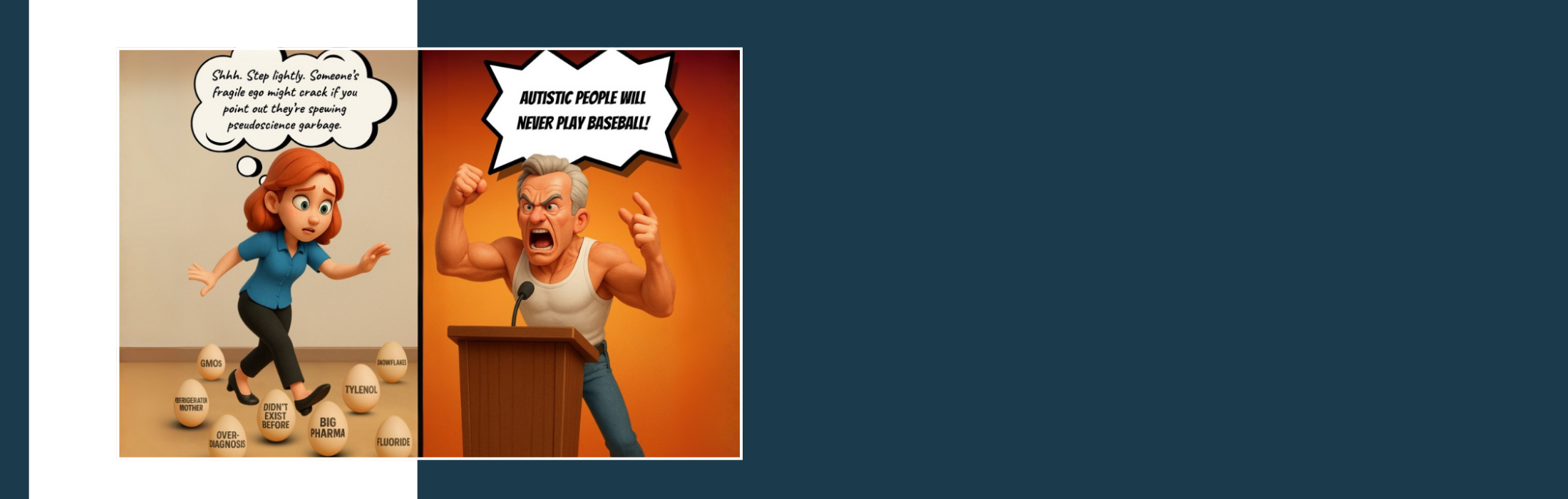
Autistic people are still too often defined by other people’s discomfort. The dominant stories focus on deficits, burden, or tragedy rather than difference, capability, or value.
And frankly, there are worse things to be than autistic.
You could be uncaring.
You could be wilfully ignorant.
You could be loudly spreading misinformation and calling it “truth”.
Let’s Change the Question
Autistic people don’t need to be cured.
They need environments that don’t punish difference.
Instead of asking what causes autism?, better questions are:
How can we make schools, workplaces, and services more accessible?
What support do autistic individuals and families actually want?
How do we challenge narratives that actively cause harm?
Autism doesn’t need an antidote.
It needs a shift in understanding.
FAQ: Common Questions About Autism and Neurodivergence
Is autism a disease?
No. Autism is a neurotype, that is it describes a certain ‘type’ of brain development and functioning - not an illness or pathological problem.
Why are more people being diagnosed now?
Because awareness, assessment tools, and clinician education have improved.
Can autism be prevented?
Autism does not need to be prevented. Framing it this way increases stigma and harm. Its like asking if ‘left-handedness’ can be ‘prevented’ - it’s a natural variation that the world needs to adapt to - not a disease that the person has to adapt to.
What actually helps autistic people?
Access, accommodations, respectful language, and neuroaffirming support.
Mathew Keany
Individual & Couples Counsellor
Need a Neuroaffirming Place That Gets It?
At 12 Points Psychology & Training, difference isn’t pathologised. It’s understood.
We provide neuroaffirming therapy, professional training, and resources grounded in evidence, ethics, and respect – no scare tactics, no snake oil.
Because being different isn’t the problem.
Being misunderstood is.
